

A Quick Look at Common Vitamins & Minerals:

A Quick Guide to B Vitamins:

Quick Tips
Eat a Variety: A balanced diet with diverse foods ensures you get a mix of B vitamins.
Go Whole: Whole grains and fresh produce are excellent sources of these essential nutrients.
Check Labels: Fortified foods can help fill in any nutritional gaps, especially for B12 if you're vegan or vegetarian.
B vitamins are like the unsung heroes of your body's daily operations, keeping everything running smoothly. By incorporating these nutrient-packed foods into your meals, you'll be giving your body the boost it needs to stay energized and healthy. Cheers to a balanced diet!
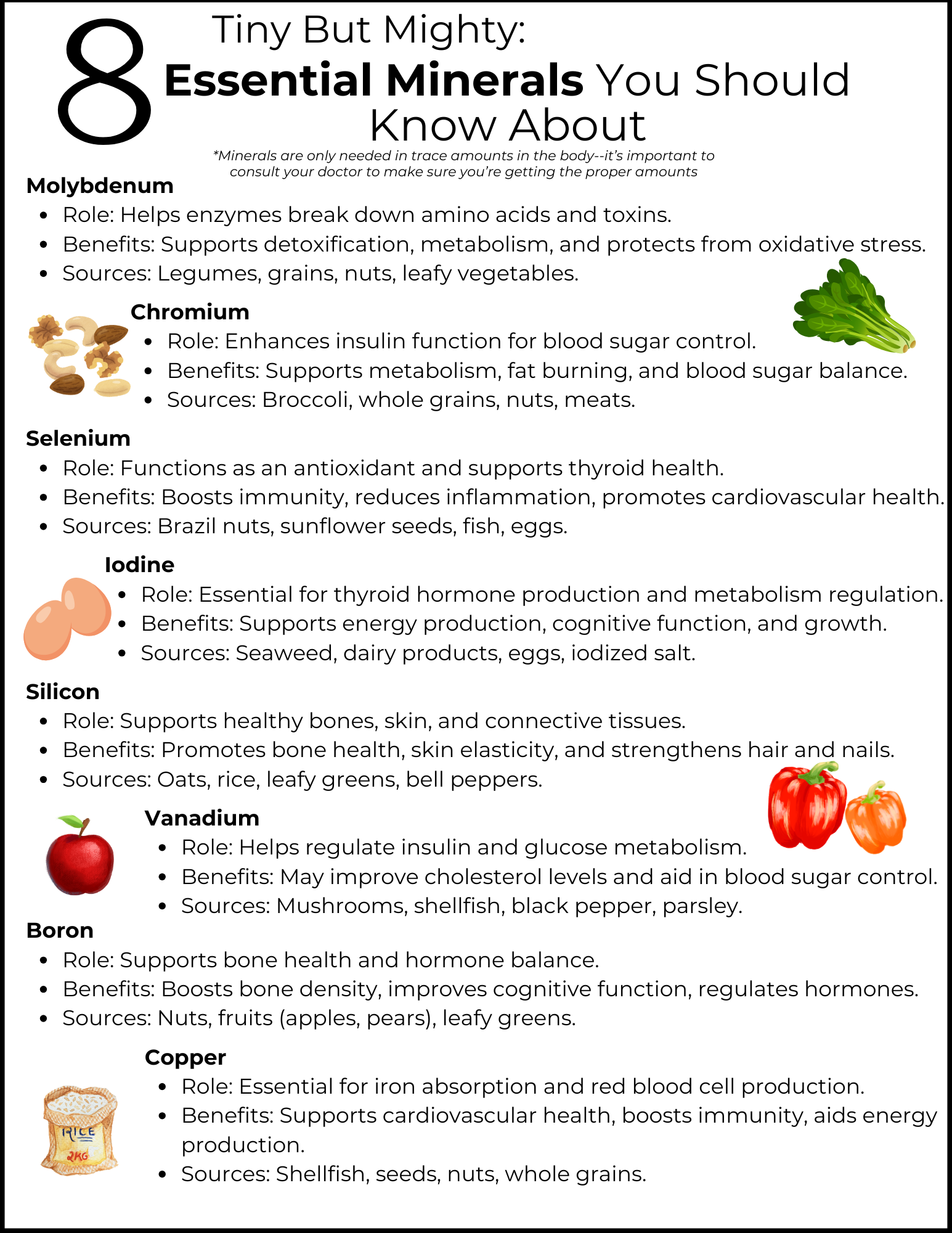
Tiny But Mighty: 8 Essential Minerals You Should Know About
Amino Acids: The Building Blocks of Life

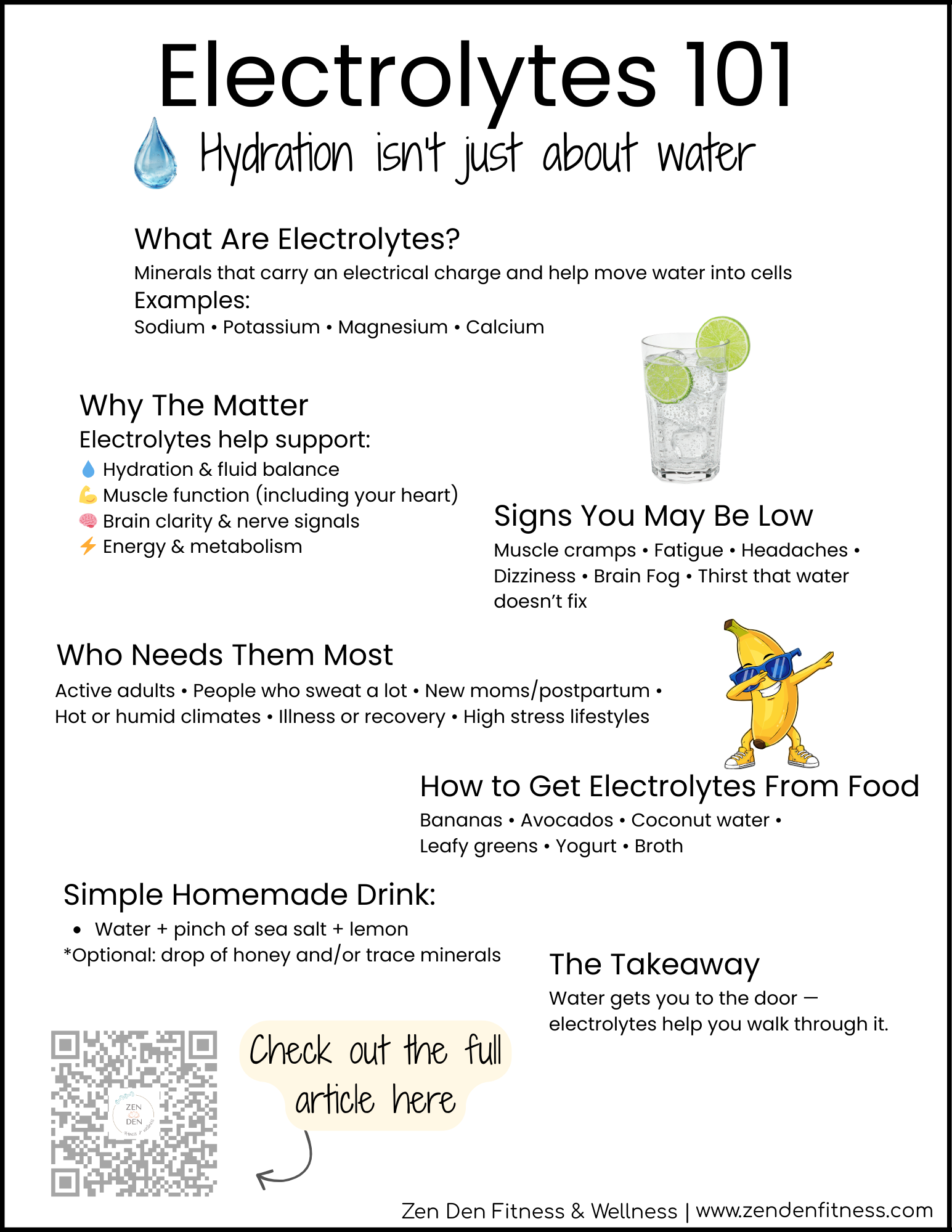
Electrolytes 101: Hydration Isn’t Just About Water
Disclaimer: I am not a doctor, mental health provider, or a licensed dietician, and therefore this is not official licensed medical, clinical, or nutrition advice. These are things that I have implemented in my own life and utilized in my personal training and my health & nutrition coaching practice after spending a substantial amount of time studying and practicing these techniques in fitness, habit change, and nutrition (still, I’m not a dietician). They are not meant to cure any ailment, and they are certainly not meant to serve as a replacement for any mental or medical healthcare treatment. It is important to always consult your physician before beginning an exercise, mental health, nutrition or supplement program of any type.