

Finished a 30-Day Beginner Workout Plan? Here’s What to Do Next
You know that moment when you finish a challenge and you’re like…
“Okay. Now what am I supposed to do with my life?”
That’s exactly what it can feel like after your first 30 days of working out.
And if the “newness” has worn off and you’re feeling a little unsure about what comes next, you’re not lazy and you’re not failing — you’re just at the part where real consistency begins. The hardest part of starting a routine isn’t the first workout… it’s staying consistent once it stops feeling exciting.
But here’s the good news: if you made it 30 days, you’re already becoming the kind of person who follows through. Now we just need a simple next-step plan that fits your real life — so you don’t fall off just because you don’t have a clear direction.
What this post will help you do
In this post, I’m going to walk you through what most people do wrong after the first 30 days, what your next month should actually focus on, and a simple “next 30 days” plan you can follow without overthinking it. No extreme schedules, no burnout, and no starting over — just a realistic path forward that helps you keep building strength, confidence, and momentum.
If you’ve already completed my 30-Day Exercise Plan for Absolute Beginners, this is your next step.
First — Look at What You Just Did (This Matters)
Before we jump into what comes next, I want you to do something that most people skip:
Take two minutes to look back at what you just accomplished.
Because if you finished a 30-day workout plan — even imperfectly, even with breaks — that’s not nothing. That’s proof. That’s follow-through. That’s you building trust with yourself.
And that matters way more than people realize.
Quick reflection (keep it simple)
You don’t need to journal for 45 minutes. Just think through these honestly:
What got easier over the last month?
What felt the hardest (and why)?
What workouts or movements did you actually enjoy?
What did you consistently stick with?
What time of day worked best for you?
What obstacles came up — and how did you work around them?

Photo by Noemi Macavei-Katocz via Unsplash
Even if your only answer is:
“I learned I can do more than I thought I could.”
That’s huge.
Here’s the truth:
The goal of your first 30 days wasn’t to become a totally new person overnight.
It was to prove:
you can show up,
you can follow a plan,
you can rebuild momentum,
and you can do hard things without needing perfect motivation.
That’s the foundation. And now we build on it.
Because the next step isn’t “do more.”
The next step is: do what you can repeat. This is how you build consistency.
What Most People Do Wrong Next
Here’s what usually happens after a beginner plan ends:
People either feel super motivated and try to do all the things… or they feel unsure and slowly stop altogether.
And honestly? Both reactions make sense.
Because when the structure disappears, your brain goes:
“Wait… what am I supposed to do now?”
And if you don’t have a plan, it’s really easy to drift.
So let’s talk about the most common mistakes people make after their first 30 days — so you can avoid them and keep your momentum.

Photo by Luis Villasmil via Unsplash
Mistake #1: Jumping straight to 6 days/week
This is one of the biggest ones. People think:
“If 3–4 days a week helped me feel better… then 6 must be even better.”
But what usually happens is:
you get sore
you get overwhelmed
life gets busy
you miss a day
then you feel behind
then you quit
More workouts isn’t better if it makes you burn out.
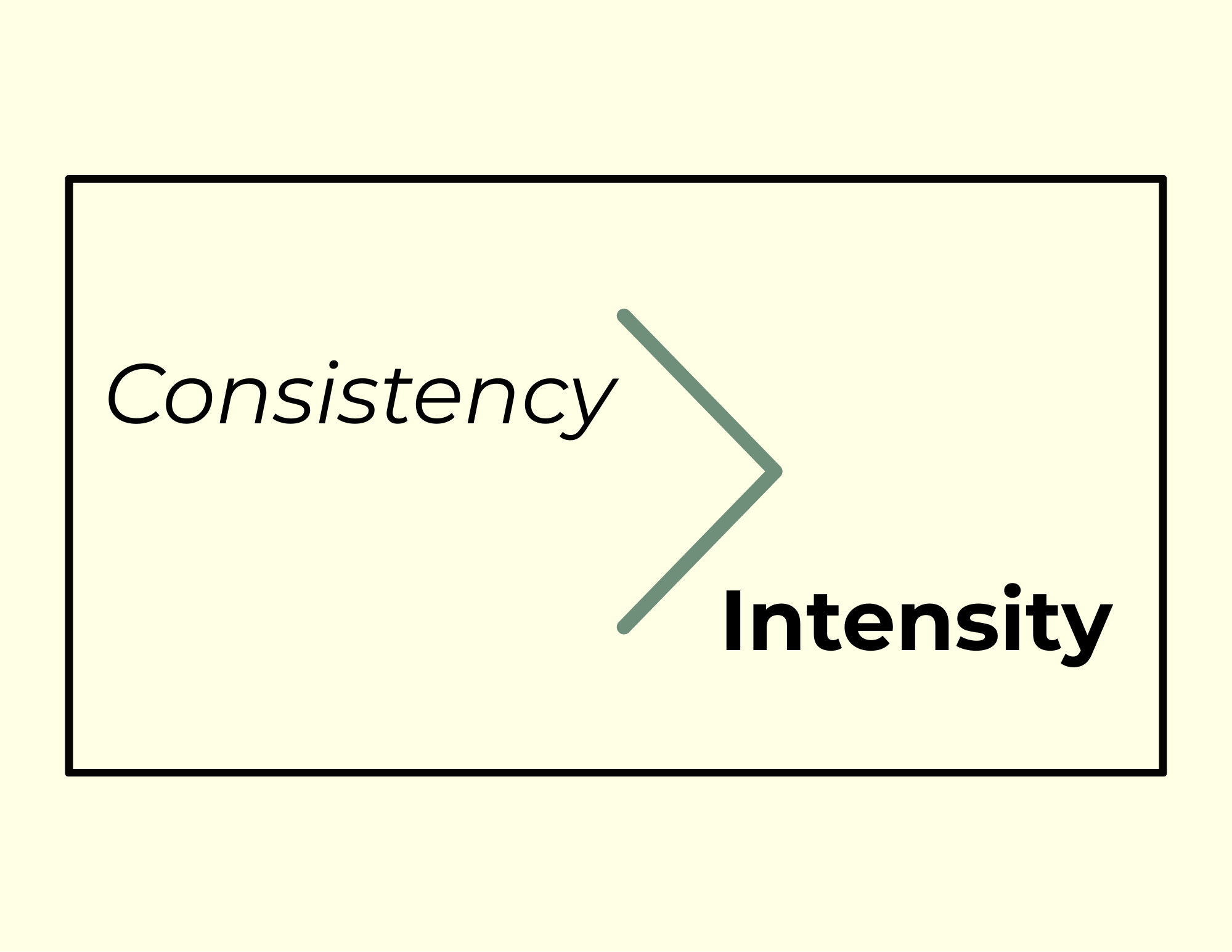
Consistency beats intensity every single time.
(Especially in this stage.)
Is it okay to build intensity? Of course! But try to stay away from that being your primary goal. Because if you focus too much on intensity over building upon that consistency, you may fall back into the overwhelm and that can make it easier to shut down and give up completely.
Instead, let the intensity complement the consistency you’ve been building (you can do this by slightly increasing weight, reps, or length of workout as you move through the next 30 days).
Learn how to be intuitive with your intensity, and results will come.
Mistake #2: Trying to “make up for lost time”
This one hits hard for a lot of people — especially women who feel like they’re behind.
Maybe you’ve thought:
“I should’ve started years ago.”
“I need to do more.”
“I need faster progress.”
So you push too hard, too fast — and it backfires.
Here’s the truth:
You’re not behind. You’re building something.
And sustainable progress doesn’t come from punishing yourself — it comes from repeating doable routines long enough for them to actually work.
Mistake #3: Ditching the beginner plan too quickly
A lot of people assume:
“If I’m still doing ‘beginner’ workouts, I’m not progressing.”
But that’s not true.
Beginner workouts are only “beginner” if you’re not applying progression.
You can do the same style of workout and still grow stronger by:
improving form
adding reps
lifting slightly heavier
slowing down the tempo of each rep
shortening rest
showing up more consistently
Remember what I said before about being intuitive with adding intensity?
You don’t need fancy.
You need repeatable.
Mistake #4: Choosing a program that doesn’t fit your real life
A plan can look amazing on paper… but if it doesn’t fit your energy, your schedule, your stress level, your sleep, your childcare situation, your work hours — it won’t stick.
And it’s not because you’re lazy.
It’s because the plan wasn’t designed for your life.
This is why I’m such a believer in realistic routines. The best workout routine isn’t the one that looks impressive…
It’s the one you can keep doing even when life is messy.
There will always be room to grow as you progress and your life changes, but there should never be room for unrealistic expectations or judgments (from yourself or other people).
The Goal of the Next 30 Days
Here’s what I want you to hear loud and clear:
The next 30 days are not about doing more.
They’re about building something you can actually keep for the long run.
This is the part of the journey where fitness stops being a “challenge”… and starts becoming a routine.
And that’s a big deal — because routines are what create results.
Not perfect weeks. Not random bursts of motivation.
Routines.
So instead of asking:
“What’s the hardest plan I can handle?”
“How many days should I push myself to do?”
“How fast can I change my body?”
I want you to ask:
“What can I realistically do most weeks… even when life is busy?”
Because that’s where the magic is.
What the next month should focus on
Your goal for the next 30 days is simple:
Keep showing up
Build consistency (not intensity)
Increase confidence
Get a little stronger / more conditioned
Build the identity of someone who works out
If you’re 30 days in, you’re already changing. Not just physically — mentally.
You’re becoming someone who follows through.
Now we just reinforce that identity with a plan that:
fits your schedule,
fits your energy,
fits your life…
so you don’t fall off just because it gets hard or inconvenient.
This is what “progress” looks like now
At this stage, progress isn’t:
doing a totally new workout everyday
working out twice a day
going from beginner to beast mode overnight
Progress is:
working out even when you don’t feel like it
choosing “good enough” instead of quitting
showing up with less drama
feeling more capable in your body
That’s the kind of progress that lasts.
Your Next 30 Days Plan (The Real-Life Version)

This is the part most people overcomplicate. So I’m going to make it simple.
If you want to keep seeing progress after your first 30 days, you don’t need a brand-new personality or a 6-day workout schedule.
You need a plan that fits real life.
That’s why this next 30 days plan is built around a realistic weekly routine — one you can stick with even when you’re tired, busy, stressed, or just not feeling it.
3 Days/Week (Simple + Sustainable)
This is the plan I recommend for most people.
Weekly Structure (can be any 3 days you choose):
Day 1: Full-Body Strength (20–30 minutes)
Day 2: Walk + Mobility (or low-impact cardio)
Day 3: Full-Body Strength (20–30 minutes)
That’s it. Wash, rinse, repeat.
If you hit those 3 days most weeks, you’re doing amazing — and you’ll continue building strength, confidence, and momentum.
Optional bonus day (only if it feels good)
If you want to add a little extra movement (but still keep it realistic), choose ONE bonus day:
a walk
light core
yoga / stretching
a “fun movement” day (dance, hike, Pilates, etc.)
No pressure — this is optional.
Because again…
Walking counts.
Short workouts count.
Low-energy options count.
Consistency counts the most.
*Even if you’re not “exercising” everyday, I highly recommend taking 5-10 minutes to stretch daily. This can help to: keep your body from getting stiff & achy; improve circulation; help your body to feel more energized; support better overall posture; increase flexibility, joint health and mobility; and it can help to calm your nervous system.
Want an upgrade? Here’s the 4-day option (Optional)
If you’re feeling good and you genuinely want a bit more structure, here’s a simple upgrade.
Day 1: Full-body strength
Day 2: Walk + mobility
Day 3: Full-body strength
Day 4: Walk + core (or low-impact conditioning) OR Yoga/Pilates
This works great for people who enjoy being active more often — but it’s NOT “better” than the 3-day plan.
The better plan is the one you can repeat.
Progression Without Pressure (How to Keep Improving Without Overthinking)
Now let’s talk about the part people worry about:
“But how do I keep progressing?”
Progression does not mean you have to do a completely different workout every week.
Progression just means you slowly improve the same basic movements over time.
Here are easy ways to do that — no stress, no complicated math.
Pick ONE of these each week:
Add 1–2 reps to each exercise
Add a little weight (even 2.5–5 lbs is progress)
Add one extra set
Slow down the tempo (especially lowering phases)
Shorten rest slightly (10–15 seconds)
Add 5 minutes to your walk
Small upgrades add up fast.
The mindset shift:
Progress isn’t doing harder workouts.
Progress is doing workouts more consistently.
Motivation Drops — Here’s What to Do (Because It Will)

Photo by Vitaly Gariev via Unsplash
Let’s normalize this right now:
You are not going to feel motivated every week.
Sometimes you’ll be excited. Sometimes you’ll feel “meh.” Sometimes you’ll feel like skipping everything.
That’s not you failing — that’s just being human.
The trick is having a plan for those weeks so you don’t fall into the “all or nothing” cycle.
Create a Minimum Baseline
Your baseline is the smallest version of your routine that still counts.
Examples:
10-minute walk
1 round of your strength workout
Mobility + stretching only
A lighter weight day
A “show up and do what you can” day
This matters because your baseline protects your habit.
Even if you do less… you’re still staying consistent.
The goal isn’t perfection — it’s momentum
You don’t need to crush it every week.
You just need to avoid disappearing.
Keep the chain alive — without shame.
How to Know You’re Ready to Level Up
A lot of beginners assume they need to change things constantly to keep improving.
But usually, the best sign you’re ready to level up is simple:
You’re ready if:
you’re consistently hitting your workouts most weeks
your form feels smoother and stronger
your weights feel too light
you recover well between workouts
you feel more capable in your everyday life
you’ve stopped “debating” workouts and started doing them
If that’s you… amazing.
And again…
You don’t need a total overhaul.
You just need a small progression step (like a little more weight, a little more structure, or slightly longer workouts).
Common “After 30 Days” Questions (Quick Answers)
Should I repeat the original 30-day plan?
Yes — especially if it’s still working for you.
Repeat it with small upgrades (more reps, slightly heavier weight, more confident form).
How many days a week should I work out?
For most people:
3 days/week = amazing
4 days/week = great
5–6 days/week = optional, but not necessary for results
What if I missed workouts during the first 30 days?
Honestly? So what. It’s normal — and it doesn’t cancel anything out.
You’re building a routine, not trying to win a perfect-attendance award.
You’re Not Starting Over — You’re Building
If you’ve made it 30 days into a new routine, you’re not at the beginning anymore.
You’ve already done the hardest part:
you started and kept going.
Now the goal isn’t to go extreme.
The goal is to build a routine that fits your real life — and repeat it long enough for it to actually change you.
Because when fitness becomes something you just do (instead of something you constantly restart)…
that’s when everything starts to shift.
Next Step: Keep It Simple (Two Helpful Resources)
1) Nutrition Support (Structure without tracking)
Next, read: How to Build Balanced Meals Without Tracking Calories or Macros
Or grab my free meal planning support here → 5 Balanced Meal Templates
2) Want a Next-30-Days Template?
Want me to send you a simple weekly habits routine you can follow for the next 30 days — without overthinking it?
Join my email list and I’ll send you the exact printable “Next 30 Days” routine + tracker pages — so you don’t have to guess what to do next.
Download your “Next 30 Days” Plan + Tracker here → Get your freebie!
Disclaimer: I am not a doctor, mental health provider, or a licensed dietician, and therefore this is not official licensed medical, clinical, or nutrition advice. These are things that I have implemented in my own life and utilized in my personal training, health coaching, and nutrition coaching practice after spending a substantial amount of time studying and practicing these techniques in fitness, habit change, and nutrition (still, I’m not a dietician). They are not meant to cure any ailment, and they are certainly not meant to serve as a replacement for any mental or medical healthcare treatment. It is important to always consult your own physician before beginning an exercise, mental health, nutrition or supplement program of any type.